

Blog
Finding the Best Medical Air Mattress for Comfort and Healing


Caring for a loved one who is restricted to a bed is a profound act of devotion. It brings immense physical and emotional demands to the family every single day. One of the heaviest daily concerns is preventing pressure ulcers while managing the physical toll of turning a patient multiple times a day.
A well-designed medical air mattress serves as a vital support system that brings physical relief to the patient and much-needed peace of mind to the caregiver. The right equipment can transform a hospital bed into a safe healing environment where the skin remains dry, pressure is managed gently, and daily hygiene routines become significantly easier for everyone involved.
Families commonly observe that integrating the right support surface early on changes the entire dynamic of home care, shifting the focus from constant worry to comfortable recovery.
What is a Medical Air Mattress and Why is it Essential?
When families transition to long-term home care, they frequently notice that standard foam mattresses fall short of protecting vulnerable skin. A medical air mattress differs significantly from standard foam surfaces because it actively redistributes body weight to relieve pressure points.
Understanding the physics of skin protection helps caregivers see why these specialized beds are so beneficial. Healthy tissue requires unobstructed oxygen and nutrient delivery to survive. However, sustained external pressure exceeding the 32 mmHg capillary threshold collapses small blood vessels. This collapse cuts off the oxygen supply and can lead to cellular death and painful skin breakdown.
Standard static foam surfaces tend to create high-pressure peaks that concentrate weight on specific bony areas. In contrast, a dynamic medical air bed mattress transforms the bed into an active therapy tool by automating repositioning and controlling the microclimate around the patient. Clinical professionals universally recognize that approximately 95 percent of pressure injuries are preventable with proactive intervention. Investing in proactive technology provides a sensible path to mitigating the human suffering associated with tissue necrosis.
Furthermore, treating a single advanced Stage III or IV injury often exceeds $70,000 in healthcare costs. By addressing these risks early, families can avoid both the physical pain for the patient and the overwhelming systemic burden of wound-related complications. The physiological benefits for the patient and the physical relief for the caregiver are deeply connected:
- The primary clinical objective of any therapeutic surface is to counteract the physics of tissue ischemia through active pressure management.
- Medical air systems utilize the principle of immersion, which refers to the depth to which a body sinks into the surface to distribute weight across a much larger area.
- These dynamic surfaces also provide envelopment, meaning the surface conforms to the irregularities of the body, such as bony prominences, without increasing localized pressure.
- By maintaining healthy blood flow, a medical air mattress protects vulnerable areas like the heels, tailbone, and shoulders from painful sores.
- Caregivers experience immense physical relief because the mattress takes over the constant need for manual repositioning, reducing the daily physical strain on the family.
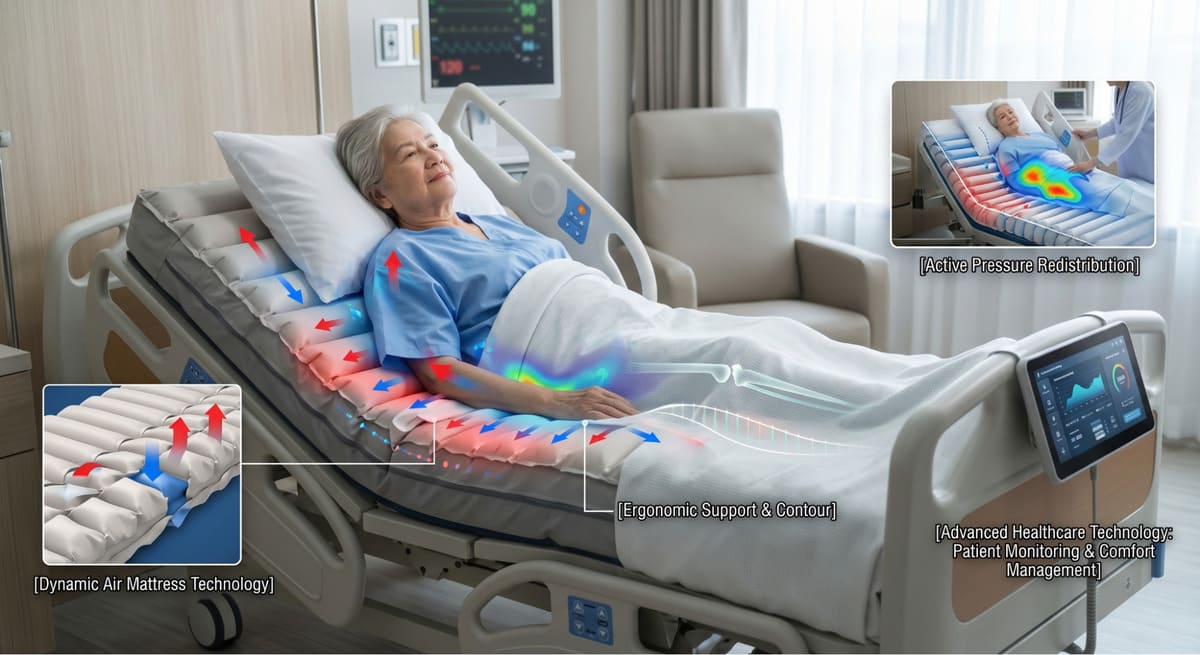
Core Components of a Medical Air Mattress for Hospital Bed Setups
A medical air mattress for hospital bed setups needs to integrate seamlessly with the bed frame to provide safe and effective care. A secure fit and anti-slip bases ensure that the mattress remains stable when the caregiver adjusts the bed’s position. This stability is particularly helpful when the head or foot of the bed is elevated for feeding, reading, or resting. Proper alignment ensures the patient remains secure and does not slide down, which could create dangerous friction and shear forces against their fragile skin.
Safety and structural design play a massive role in daily home care. Bariatric patients, for example, require specialized structural considerations. For bariatric patients weighing up to 1,000 pounds, a reinforced mattress height of eight to ten inches is usually insufficient on its own. A common clinical recommendation involves matching the mattress to specific frame widths of 42, 48, or 54 inches to ensure safe positioning. Another highly beneficial structural feature is the Cell-on-Cell design. This features an internal secondary layer of air that remains inflated even during power failures. This secondary layer prevents the patient from sinking all the way down to the hard bed frame if the electricity unexpectedly goes out. Additionally, many quality mattresses include specialized heel slopes. These slopes feature a 30-degree declining zone at the foot of the mattress to offload pressure from the uniquely vulnerable calcaneal region at the heels.
The type of bedding used over the mattress is equally important. Using standard tight-fitted sheets creates a hammock effect. This effect increases interface pressure and negates the immersion properties of the mattress. A common clinical practice involves using vapor-permeable, low-shear, four-way stretch covers. These covers flex with the mattress and protect the skin from friction. For infection control, caregivers usually wipe these covers weekly with hospital-grade disinfectants to maintain a clean environment.
The Mechanics of a Medical Air Mattress with Pump
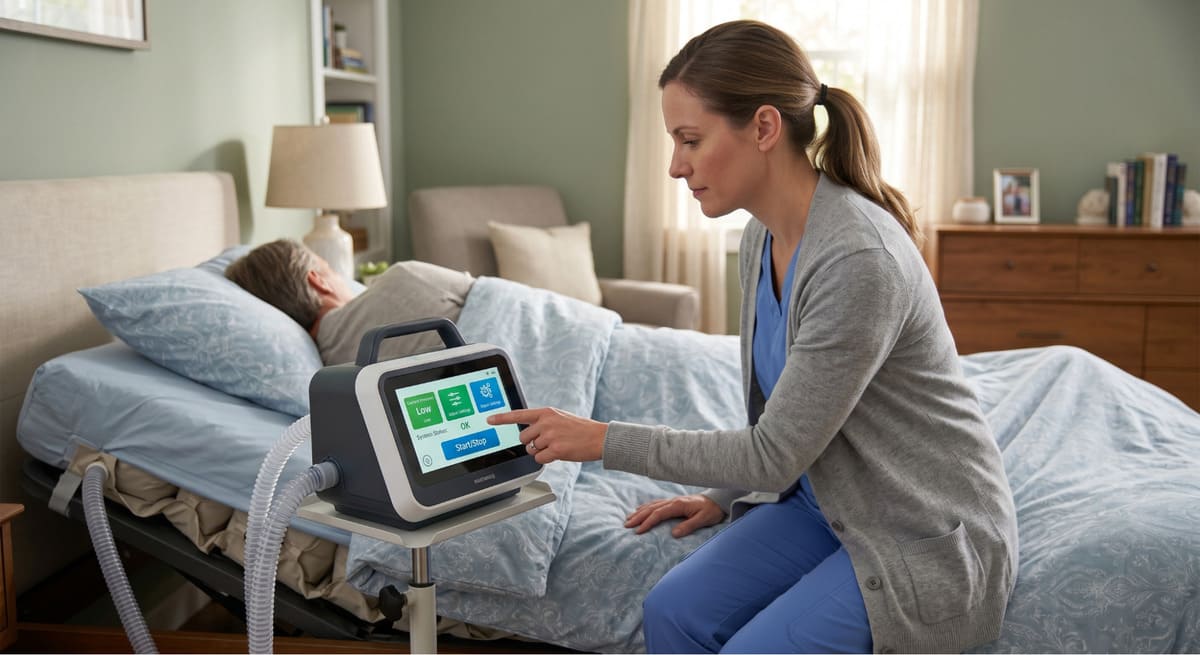
The control unit is the beating heart of a medical air mattress with a pump. It operates quietly in the background to alternate the air cell pressure and keep the patient comfortable. Dynamic surfaces utilize individual air cells, typically ranging from 16 to 20 cells per mattress, which are controlled by a powered compressor.
This compressor manages the inflation and deflation cycles to simulate natural body movement. Modern pump systems also come equipped with auditory and visual low-pressure alarms. These alarms immediately alert caregivers to system failures, ensuring the patient is never at risk of bottoming out against the hard bed frame. To maintain the mechanical integrity of the pump, monthly maintenance usually involves cleaning the air filters.
When evaluating a pump system, caregivers often look for the following essential functions:
- The pump operates quietly to ensure the patient can sleep without being disturbed by loud mechanical noises.
- Weight dials or digital settings allow caregivers to customize the firmness level based on the specific weight and comfort preferences of the patient.
- A static mode feature provides a firm and stable surface temporarily, which is incredibly helpful for safe nursing care during bathing, dressing, or transferring the patient in and out of bed.
- A CPR valve is a mandatory requirement for any medical air surface.
- The CPR quick-release valve allows for rapid deflation in seconds should the patient unexpectedly require emergency chest compressions.
How to Identify the Best Medical Air Mattress for Your Specific Needs
Finding the best medical air mattress requires families to evaluate their unique situation carefully. Caregivers often begin by assessing the patient’s mobility level and the amount of time they spend in bed. For example, it is helpful to ask if the patient spends more than 15 hours a day in bed. If the patient is completely immobile, a more advanced support surface is typically required. Families also evaluate the physical strength of the primary caregiver who handles daily repositioning tasks. If turning the patient causes back strain for the caregiver, a mattress with automated turning features becomes a high priority.
Clinical staging provides a helpful framework for selecting the right surface. If a patient is at risk for Stage I pressure injuries, non-powered Group 1 surfaces, such as foam thicker than 5 inches or overlays thicker than 3 inches, are often indicated.
For patients developing Stage II partial thickness injuries, a powered alternating pressure system is generally required. A helpful clinical guideline often referred to is the 30-day rule. This rule suggests that Group 2 surfaces are medically indicated if a Stage II injury has worsened or remained unchanged for at least 30 days while the patient was using a Group 1 surface. If the patient has multiple Stage II injuries on the trunk or pelvis, an immediate upgrade to a Group 2 surface is often warranted.
High-immersion Group 2 combination systems or lateral rotation beds are usually needed for severe Stage III or IV full-thickness wounds. For patients transitioning out of acute care who may not need full air therapy, an adjustable bed base paired with a high-density, zoned foam mattress can provide improved positioning and circulation.
To ensure the mattress is configured safely, caregivers frequently use the manual hand check protocol. This simple operational check confirms adequate immersion and prevents the patient from bottoming out. The caregiver ensures the patient is in the supine position. Then they slide a hand, palm up, beneath the mattress air cells directly under the sacrum. There needs to be at least one inch of inflated air cushion between the hand and the bed frame. If the space is less than one inch, the pressure setting needs an immediate increase to protect the patient.
Alternating Pressure vs. Low Air Loss Therapies
Understanding the difference between alternating pressure and low air loss therapies helps families choose the right healing environment. Alternating pressure physically shifts the weight-bearing load, while low-air-loss systems use micro-ventilation to keep the skin cool and dry. Advanced systems often combine both features to provide optimal skin protection for highly vulnerable patients.
Alternating pressure technology mimics natural movement via the cyclic inflation and deflation of specific air cell groups. While standard home-care units might operate on 10 to 20 minute cycles, modern clinical systems often allow for 5 to 10 minute cycles to maximize blood flow restoration.
On the other hand, low-air-loss systems prioritize microclimate management. These systems utilize laser-cut micro-perforations to release a steady flow of air up through the vapor-permeable cover. This gentle airflow wicks away moisture to prevent maceration. Maceration is a dangerous condition where wet skin becomes incredibly fragile and highly prone to rapid breakdown. Moisture control is particularly important for patients experiencing excessive sweating or managing incontinence.
Easing the Daily Caregiving Routine Beyond Pressure Relief with ObboMed
The daily life of a family managing long-term care revolves around constant physical lifting, cleaning, and monitoring. The overarching goal of any care plan is to create a therapeutic environment that balances medical-grade pressure relief with patient stability. Moving from a reactive wound-treatment model to a proactive, safety-first clinical environment changes everything for a family. This is where the ObboMed Complete Bedside Care System steps in to transform the daily caregiving experience. ObboMed focuses exclusively on integrated solutions that address both patient comfort and caregiver exhaustion.
Traditional caregiving often leads to severe back injuries and chronic fatigue for family members. Integrated systems that support automatic lateral turning, safe side rails, and easier access for hygiene tasks can dramatically reduce caregiver fatigue. ObboMed designs its products with a deep understanding of these exact daily struggles. The unique combination of patented multi-mode pressure relief turning and built-in fan ventilation keeps the patient dry while actively shifting their weight.
- Reducing Physical Strain: Lateral rotation features allow side-to-side tilting up to 40 degrees. This automated movement helps with pulmonary clearance and eliminates the need for caregivers to manually heave and roll the patient every two hours.
- Managing Microclimates: The integrated fan system actively blows away trapped heat and moisture. By keeping the skin dry and cool, caregivers spend less time worrying about sweat-induced rashes and maceration.
- Simplifying Daily Hygiene: Specialized designs that support in-bed toileting and hair washing mean the patient does not need to be hoisted into a wheelchair for basic bathroom needs. This feature preserves the dignity of the patient while protecting the caregiver from lifting injuries.
- Ensuring Fall Prevention: Inflatable side guardrails provide a soft but secure boundary, keeping the patient safely centered during automated turning cycles and offering peace of mind when the caregiver steps out of the room.
If you are currently navigating the heavy demands of home care and notice that standard mattresses are failing to protect your loved one, it is time to upgrade your support system. A proactive approach protects fragile skin and preserves the physical health of the family members providing care. Explore the ObboMed Complete Bedside Care System today to find a therapeutic medical air mattress that fits your specific needs. Bring comfort back to your loved one and restore balance to your daily caregiving routine.
Medical Air Mattresses (FAQ)
Q1: Why do bedbound patients need a medical air mattress?
When someone stays in bed for long periods, sustained pressure can restrict blood flow and lead to skin breakdown. A medical air mattress actively shifts body weight to relieve pressure points, which often helps keep the skin intact and provides significant comfort during recovery.
Q2: How does an alternating pressure mattress work?
This type of surface uses a quiet pump to slowly inflate and deflate different groups of air cells in a continuous cycle. This gentle movement mimics natural body shifting, restoring circulation to vulnerable areas like the heels and tailbone without requiring the caregiver to manually turn the patient as frequently.
Q3: Can regular fitted sheets be used on a medical air bed?
It is generally suggested to avoid standard tight-fitted sheets because they can create a hammock effect that reduces the mattress’s ability to distribute weight. Caregivers often find better results using specialized vapor-permeable, four-way stretch covers that move freely with the air cells and reduce friction against fragile skin.
Q4: How do I check if the mattress pressure setting is right for my loved one?
A practical approach is the manual hand check method. With the patient lying flat, slide your hand with the palm facing up underneath the air cells directly under their lower back. You are looking for at least one inch of inflated air space to ensure they are not resting against the hard bed frame beneath the mattress.
Q5: What is the difference between alternating pressure and low air loss therapies?
Alternating pressure physically shifts the weight of the patient to relieve prolonged resting spots. Low air loss systems release a gentle and steady flow of air through the cover to manage the temperature. Low air loss is frequently chosen for patients who experience heavy sweating or moisture concerns to keep their skin cool and dry.
Q6: Does a medical air mattress help reduce caregiver strain?
It often makes a notable difference in the daily routine. Many advanced systems integrate automated lateral turning and built-in ventilation. This technology takes over the heavy lifting involved in routine repositioning, which typically helps reduce the physical exhaustion and back strain that family caregivers frequently experience.
Bring Relief to Your Daily Routine with the ObboMed Complete Bedside Care System

Managing the daily needs of a bedridden loved one brings unique physical and emotional weight to a family. Caregivers often find themselves waking up multiple times a night to assist with repositioning or constantly worrying about trapped heat and skin moisture. We commonly observe that introducing the right equipment can gently shift this demanding cycle.
The ObboMed Complete Bedside Care System is built around the realities of home care. It combines patented multi-mode pressure relief turning with built-in fan ventilation to keep the patient cool and dry. Beyond basic pressure management, the system includes thoughtful designs that support in-bed toileting and hair washing alongside inflatable side guardrails for added security. These practical additions often reduce the heavy lifting and back strain that family members face during routine hygiene care.
If you are looking for a way to improve the healing environment for your loved one while protecting your own physical well-being, we invite you to discover our solutions.
Visit the ObboMed website to view our multi-functional medical air mattresses and contact our support team today to find the right system for your specific home care needs.