

Blog
Choosing an Alternating Pressure Mattress: Prevention & Caregiver Guide

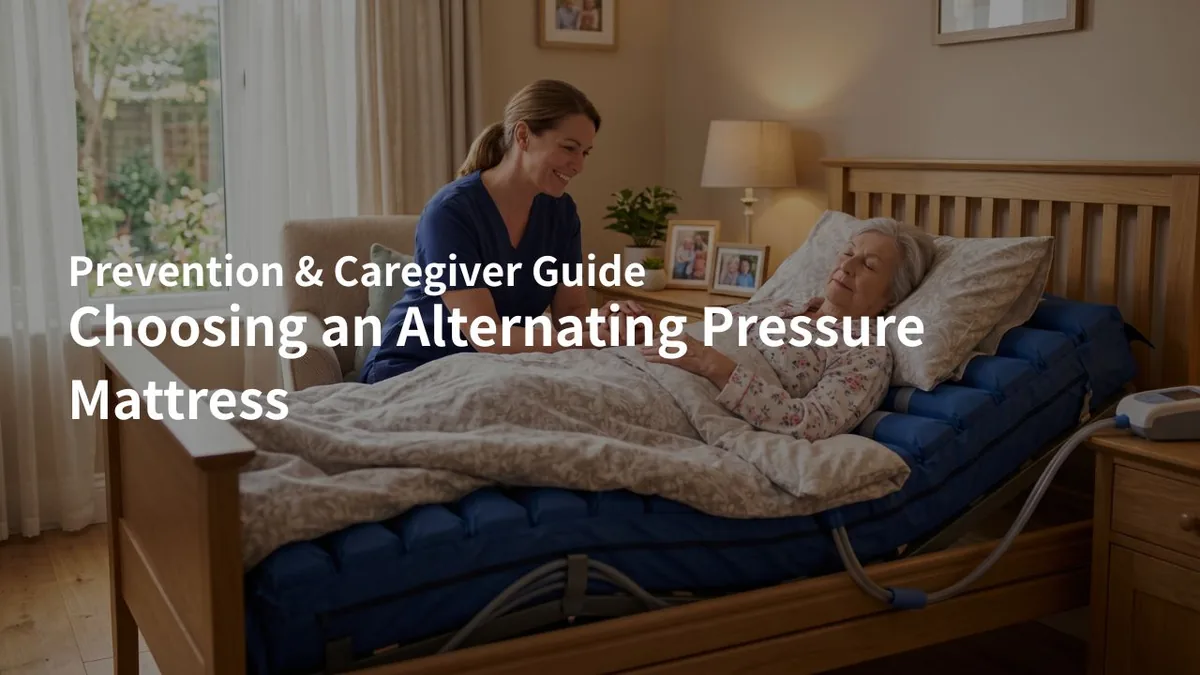
Pressure injuries (pressure ulcers or bedsores) can place a significant burden on caregivers, who often need to manually reposition patients every two hours. With appropriate prevention strategies, many pressure injuries can be reduced or avoided. Alternating pressure mattresses (APMs) help redistribute pressure by regularly changing support points, reducing pressure-related risks for patients while easing caregiver workload.
What is an Alternating Air Pressure Mattress?
Pressure injuries often develop over bony areas such as the sacrum, heels, and hips when prolonged external pressure restricts blood flow. Alternating pressure mattresses use mechanical pressure redistribution to reduce prolonged loading on vulnerable areas and support tissue recovery.
Support Modalities and Patient Profiling
| Feature | Reactive (Static) Surfaces | Active (Alternating) Surfaces |
|---|---|---|
| Mechanical Action | Remains stationary; provides constant low pressure (CLP). | Rhythmic inflation/deflation via an external pump. |
| Pressure Principle | Immersion and Envelopment. | Systematic loading and off-loading of tissue zones. |
| Clinical Goal | Spreads weight evenly by maximizing contact area. | Keeps interface pressure below capillary closing pressure. |
| Patient Profile | Low-to-moderate risk; capable of some independent movement. | High-to-very high risk; immobile or bariatric patients. |
| Caregiver Impact | Requires high-frequency manual repositioning. | Mimics body movement; reduces the frequency of manual turning. |
Note: When one zone off-loads, the remaining loaded zones may temporarily experience higher pressure. Systems must ensure these zones do not exceed safe thresholds.
The Mattress Pump System: Core Functionality
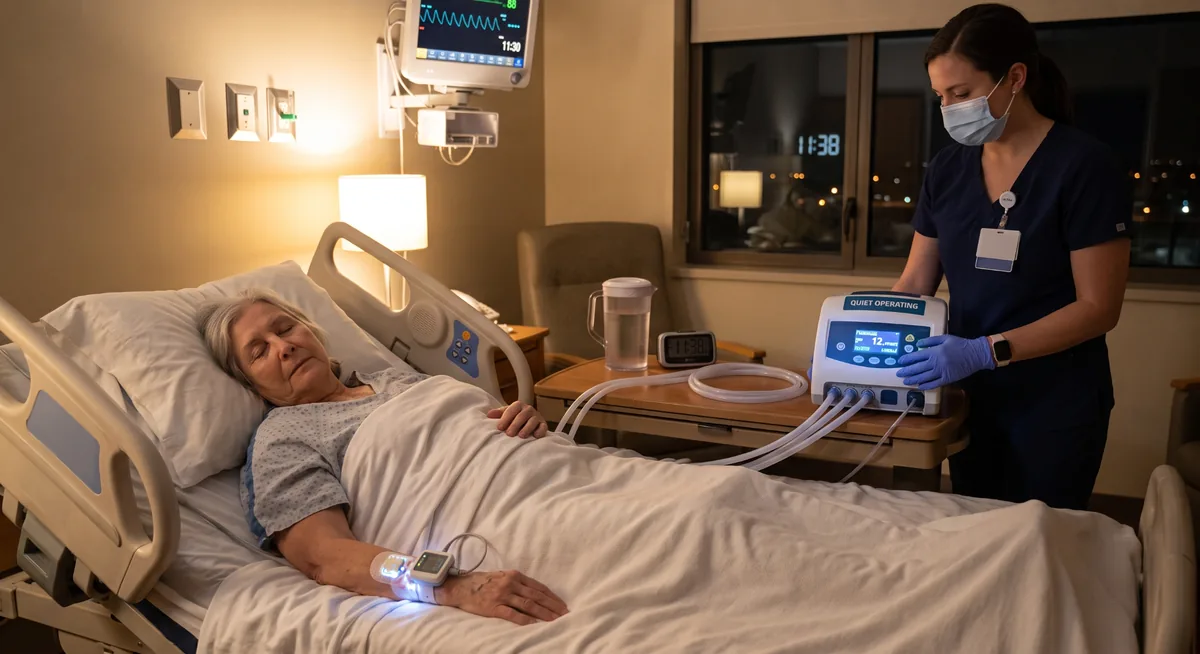
The pump acts as the control center of the system, cycling air pressure every 10 to 20 minutes to help reduce prolonged pressure on the same areas.
- Alternating Mode: Fully inflates and deflates alternating cells for effective pressure off-loading.
- Lateral Rotation: Gently rotates the patient from side to side to redistribute pressure, support lung expansion, and reduce caregiver repositioning.
Pump Quality
A high-quality pump provides stable pressure, reliable performance, and long-term durability. Motor quality, airflow control, vibration reduction, noise level and overall construction contribute to consistent pressure therapy and patient comfort.
Pump Noise Level
Because the pump operates continuously, noise levels are an important consideration, especially for overnight use. Quieter operation can support better sleep and comfort, while unusual noise may indicate issues such as a kinked hose or a clogged air filter.
Advanced Sensors & Features
- Auto Pressure Adjustment: Automatically adjusts cell pressure based on patient weight and position.
- Additional Care Features: Some models include advanced monitoring or positioning functions to further support patient care.
Choosing the Right System: Overlay vs. Full Mattress
Patient evaluation often considers factors such as mobility, body weight, and pressure injury risk level. The appropriate support surface should match the patient’s care needs and daily activity level.
Overlay Systems (3–5 Inches Deep)
- Designed to sit directly on top of an existing mattress for low-to-moderate risk patients.
- Risk: A worn, sagging, or overly soft base mattress may reduce the overlay’s support and pressure-redistribution performance, increasing the risk of the patient bottoming out against the harder surface underneath.
Full Mattress Replacements (8+ Inches Deep)
- Standalone systems for immobile or high-risk patients.
- Cell-on-Cell Design: The bottom layer stays permanently inflated to prevent bottoming out during power outages or transport.
- Bariatric Needs: Engineered with reinforced pumps and durable materials, with some models supporting up to 1,000 lbs.
Operational Maintenance & Financial Considerations
- Avoid Non-Stretch Linens: Choose low friction, low shearing cover, tightly tucked sheets or thick continence pads bridge over air cells, blocking therapeutic immersion (the hammock effect).
- Cover & Pump Maintenance: Check vapor-permeable covers daily for fluid penetration (“striking through”). Clean with mild, hospital-grade disinfectants and keep pump vents clear of dust or pet hair.
- Insurance & Medicare: Classified under Durable Medical Equipment (DME). Requires proof of medical necessity (Braden score <12-14, severe mobility limits, or history of sores). Out-of-pocket costs can sometimes be managed via HSAs, FSAs, or financing.
Microclimate Management: Low Air Loss (LAL)
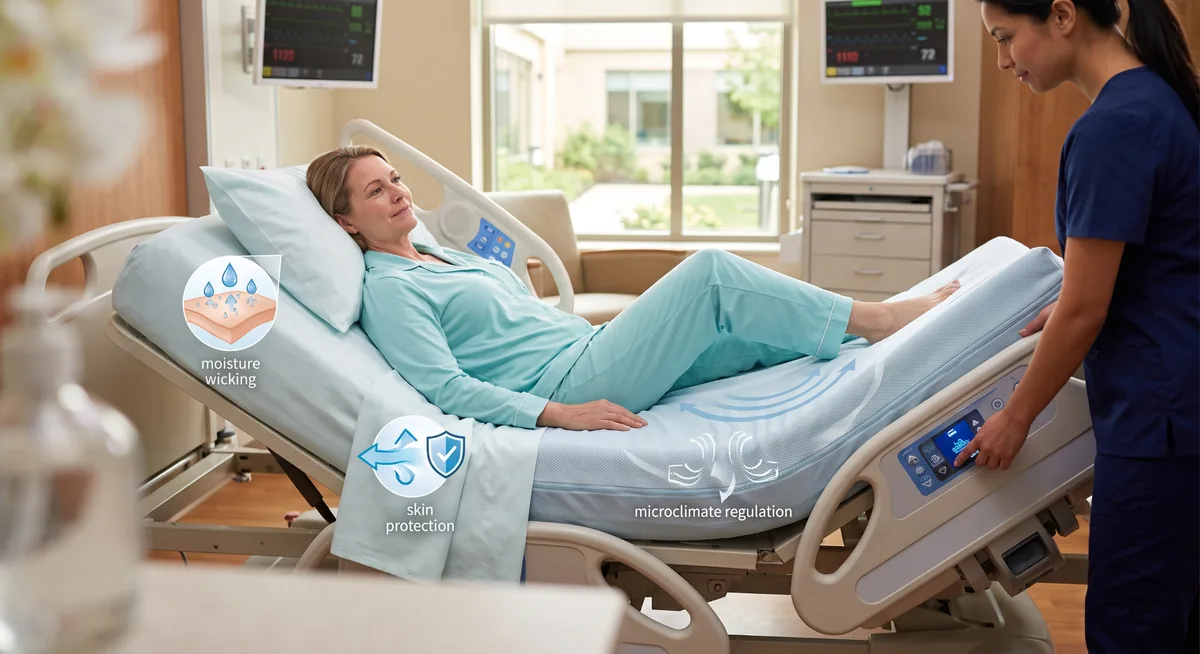
Low Air Loss (LAL) technology uses small laser-cut openings to provide continuous airflow across the mattress surface.
- Moisture Wicking: Calibrated airflow evaporates sweat and moisture, reducing the risk of skin maceration.
- Temperature Regulation: Dissipates trapped body heat to help maintain a comfortable skin temperature.
- Contraindication: Avoid using electric blankets, as they may interfere with temperature regulation and cause a hammock effect.
- Advanced Note: Air-fluidized beds (using pressurized air and beads) represent the pinnacle of immersion but are reserved for specialized burn or wound units.
Support Surface Material Comparison
| Material Type | Core Benefits | Operational Challenges | Strategic Clinical Impact |
|---|---|---|---|
| Air Cells | Lightweight, adjustable firmness; enables LAL/alternating modes. | Risk of punctures/leaks; may feel less stable during transfers. | Gold standard for high-risk ischemia and pressure injuries. |
| Foam | Zero mechanical maintenance; stable edge for transfers. | Retains heat; flattens over time from wear. | Best for low-risk patients or as a hybrid base layer. |
| Gel | Conforms to body contours; distributes weight over a larger area for pressure relief. | Passive pressure redistribution only; performance varies by gel thickness, foam structure, patient weight, and immersion level. | Suitable for moderate pressure relief but may not meet needs of high-risk patients requiring active therapy. |
| Water | Highly immersive and comfortable. | Heavy, prone to leaks, difficult for mobility; non-standard. | Largely obsolete due to weight and transfer safety risks. |
| Hybrid | Combines foam stability with air cell pressure relief. | Quality varies significantly by manufacturer. | Ideal for patients progressing toward greater mobility and partial independence; not suitable for high-risk patients requiring advanced pressure relief. |
Frequently Asked Questions
Q1: Do alternating pressure mattresses really prevent bedsores?
Yes. Alternating pressure mattresses help redistribute pressure by regularly changing support points, reducing prolonged pressure on vulnerable areas.
Q2: How long can a patient stay on an alternating pressure mattress?
They are designed for 24/7 continuous use. Combining them with a regular turning schedule offers maximum skin protection.
Q3: Can you put regular sheets on an alternating pressure mattress?
Standard tight sheets create a bridge that stops the patient from sinking into the mattress. Use loose, breathable cotton sheets or specialized stretch covers.
Q4: Does Medicare cover alternating pressure mattresses?
Medicare Part B covers them as Durable Medical Equipment (DME) if a doctor documents medical necessity (e.g., low Braden score or complete immobility).
Q5: Are alternating pressure mattress pumps loud?
Most pumps run with a low, steady sound. Noise levels vary by brand and model, and excessive noise may affect sleep quality and comfort. Consider pump noise as well as treatment performance, especially for overnight use.
Discover How ObboMed Transforms Daily Care
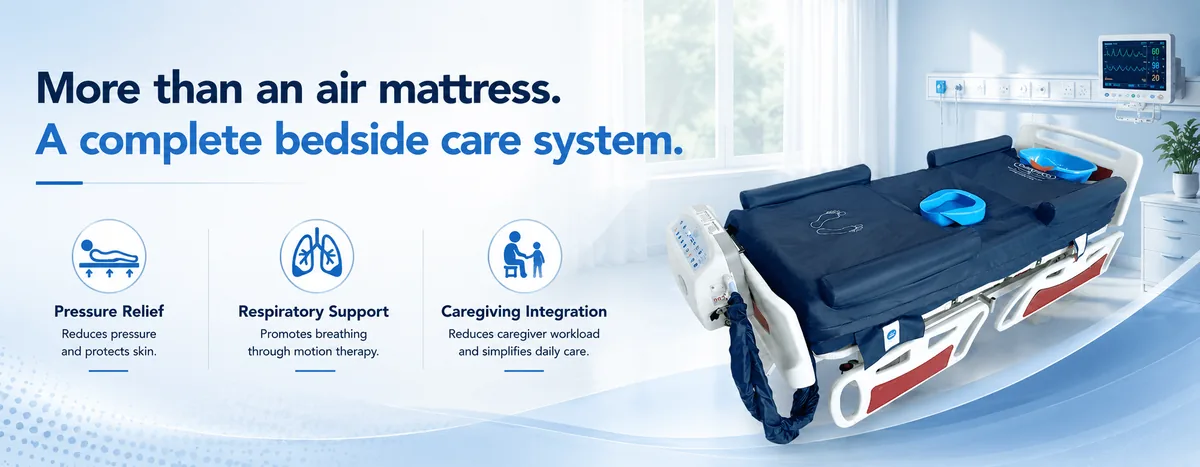
The ObboMed Complete Bedside Care System is designed to reduce the physical demands of long-term care. ObboMed medical air mattresses combine patented multi-mode pressure relief, alternating, automated lateral turning, microclimate ventilation, and integrated in-bed toileting and shampoo functions. By minimizing unnecessary and potentially dangerous patient transfers, the system helps protect skin integrity, improve daily care efficiency, and provide greater comfort and peace of mind for both patients and caregivers.
Explore ObboMed integrated mattress systems and connect with a care specialist at ObboMed to find the right solution for your family.