

Blog
Restoring Comfort with a Low Air Loss Mattress

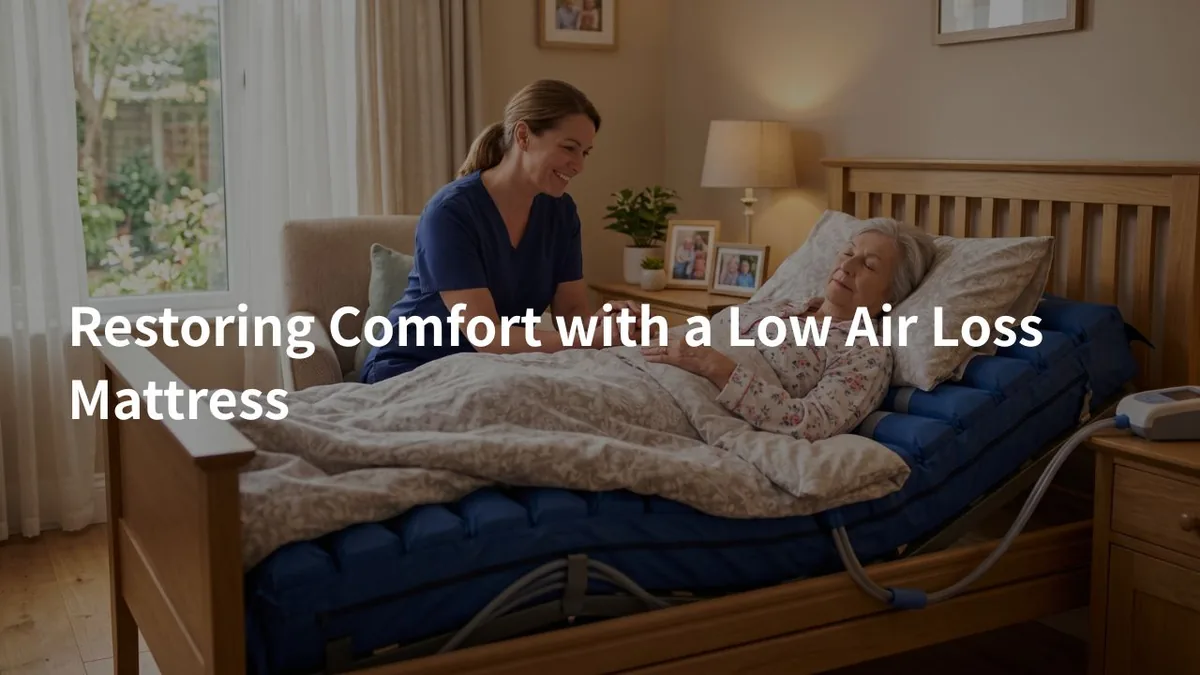
Caring for a bedridden loved one is an act of deep love that comes with significant physical demands. You want them to feel safe and comfortable around the clock. In home care, maintaining a healthy skin microclimate—by managing temperature, moisture, and pressure—plays an important role in supporting skin protection and comfort. Therapeutic support surfaces are specialized medical equipment designed to address the physiological demands of vulnerable skin.
For individuals with limited mobility, choosing the right support surface can play an important role in comfort, skin protection, and overall care. When pressure injuries occur, they may lead to serious complications if not properly managed, making early prevention and appropriate support essential.
Understanding the Low Air Loss Air Mattress
The Mechanics of Microclimate Control
Healthy skin depends on maintaining the right balance of temperature, moisture, and pressure. A Low Air Loss Air Mattress is engineered to help create this optimal environment through continuous airflow and pressure redistribution.
The mattress consists of multiple air-filled chambers enclosed within a breathable cover. An integrated blower delivers a controlled flow of air through many microscopic laser-cut perforations, creating gentle ventilation across the mattress surface. This continuous airflow helps dissipate heat and reduce excess moisture caused by perspiration, keeping the skin cooler and drier during extended periods of bed rest.
By helping manage the skin’s microclimate, a Low Air Loss Mattress may reduce moisture buildup that can contribute to skin maceration—a condition in which prolonged exposure to moisture softens the skin and makes it more susceptible to damage. At the same time, the air-filled chambers evenly distribute body weight to reduce pressure on vulnerable areas while providing a stable, floating sensation without the pronounced wave-like motion found in some dynamic air mattress systems. The result is improved comfort and a supportive resting environment for individuals who require long-term bed care.
Finding a Low Air Loss Mattress for Hospital Bed Setups
Evaluating Your Options
Families often ask how to upgrade their existing home care equipment without causing disruption. Selecting a low air loss mattress for hospital bed setups depends on the patient’s mobility level and wound stage.
In general, healthcare professionals select therapeutic support surfaces based on the patient’s level of pressure injury risk and the amount of pressure redistribution required.
| System Type | Typical Clinical Use |
Ideal Use Case |
|---|---|---|
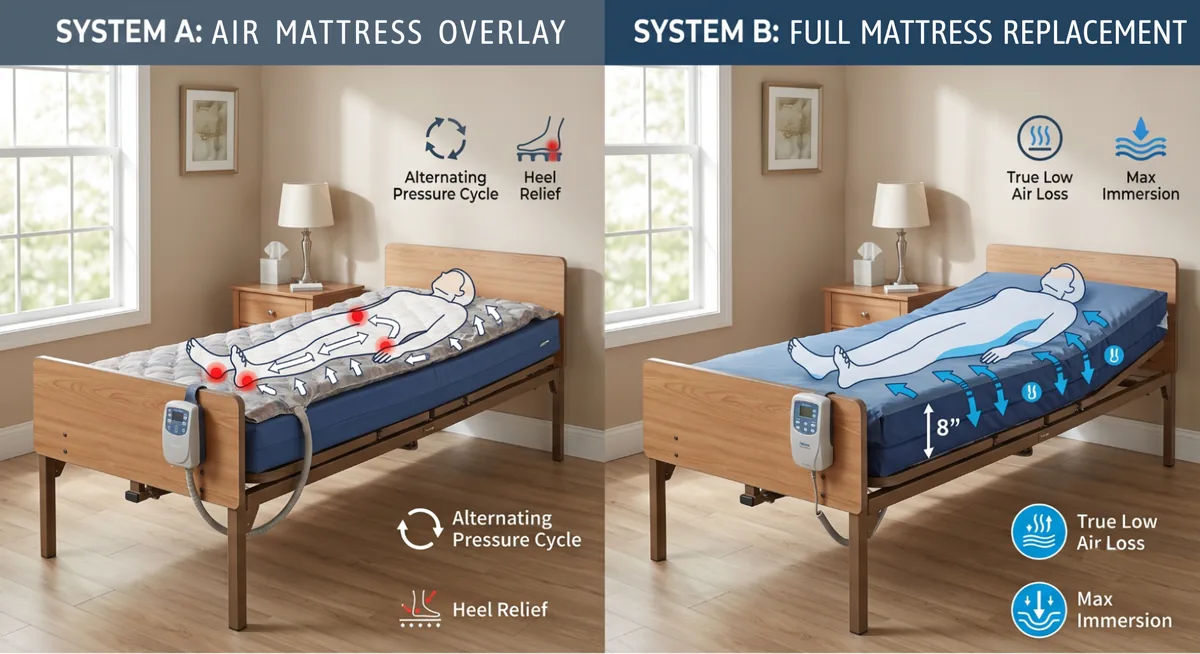
| Low Air Loss Mattress Overlay | Stage 1 to Early Stage 2 wounds | Patients needing more protection who spend long periods in bed |
| Full Low Air Loss Mattress Replacement | Stage 3 to Stage 4 wounds | Immobile patients or those with existing deep tissue injuries |
A Low Air Loss Mattress Overlay is placed on top of an existing bedframe, making it a convenient option for those who need additional pressure relief without replacing their current bed.
For individuals who remain in bed for extended periods or have more advanced care needs, a Full Low Air Loss Mattress System offers a higher level of support. Because it replaces the standard mattress entirely, it helps reduce the risk of “bottoming out”—when body weight compresses the mattress enough to limit its pressure redistribution effectiveness. These systems are designed to provide consistent immersion, pressure redistribution, and long-term comfort.
The Synergistic Approach: Low Air Loss Alternating Pressure Mattress
Active Pressure Redistribution for Daily Care
Repositioning a bedridden adult every two hours can be physically demanding for family caregivers. For individuals who are unable to change positions independently, prolonged pressure on the same areas of the body can affect comfort and increase the risk of skin damage.
A Low Air Loss Alternating Pressure Mattress combines two complementary technologies to address these challenges. The alternating pressure system uses a motorized pump to inflate and deflate air cells in timed cycles, while the low air loss function continuously circulates air to regulate heat and moisture at the skin’s surface.
This combination can help:
- Redistribute pressure away from high-risk areas such as the sacrum, hips, and heels.
- Maintain a cooler, drier skin environment by reducing heat and moisture buildup.
- Improve comfort during extended periods of bed rest by minimizing prolonged pressure on the same areas.
- Complement routine repositioning and skin care as part of a comprehensive pressure injury prevention approach.
By combining alternating pressure with continuous airflow, these therapeutic support surfaces address both pressure redistribution and microclimate management in a single system. While they do not replace regular repositioning or other aspects of clinical care, they can help improve comfort, support skin integrity, and make daily caregiving more manageable.
Providing a cooler, drier, and well-supported resting environment allows patients to rest more comfortably while giving caregivers greater confidence and support in their daily care routine.

Low Air Loss Mattress (FAQ)
Q1: What does a low air loss mattress do?
It helps keep the skin cool and dry by distributing a gentle flow of air through many tiny holes in the mattress air cells. Its moisture-vapor-permeable top cover allows heat and perspiration vapor to escape, helping keep the patient’s skin cooler and drier. This continuous airflow helps reduce heat and moisture buildup caused by perspiration, supporting skin comfort and helping minimize conditions such as moisture-related skin softening (maceration) that may contribute to skin breakdown.
Q2: Who should use a low air loss mattress?
These systems are commonly used for patients with limited mobility or those who spend long periods in bed. They are especially helpful for individuals dealing with excess sweating, incontinence challenges, or those facing a higher risk of developing pressure injuries.
Q3: Is low air loss the same as alternating pressure?
They serve different main purposes. Low air loss focuses on keeping the skin dry and cool through constant airflow. Alternating pressure changes weight distribution by inflating and deflating different air cells in cycles to help reduce prolonged pressure on specific areas. Many advanced therapeutic support surfaces combine both functions and lateral rotation to support daily well-being.
Q4: How does a specialized mattress help family caregivers?
Caring for a bedridden loved one often involves physically demanding tasks such as repositioning, hygiene assistance, and daily comfort care. A specialized support surface that helps manage pressure and moisture can make caregiving routines more manageable by improving patient comfort and reducing some of the challenges associated with long periods of bed rest. This allows caregivers to focus more on personal connection and overall well-being.
Q5: Should I choose an overlay or a full mattress replacement?
An overlay rests on top of your existing bed and is often suitable for early-stage pressure concerns. A full mattress replacement offers deeper support and is generally observed to be a better choice for completely immobile patients or those with deep tissue injuries. A full system completely replaces the standard mattress and helps reduce the risk of bottoming out.
ObboMed Complete Bedside Care Systems
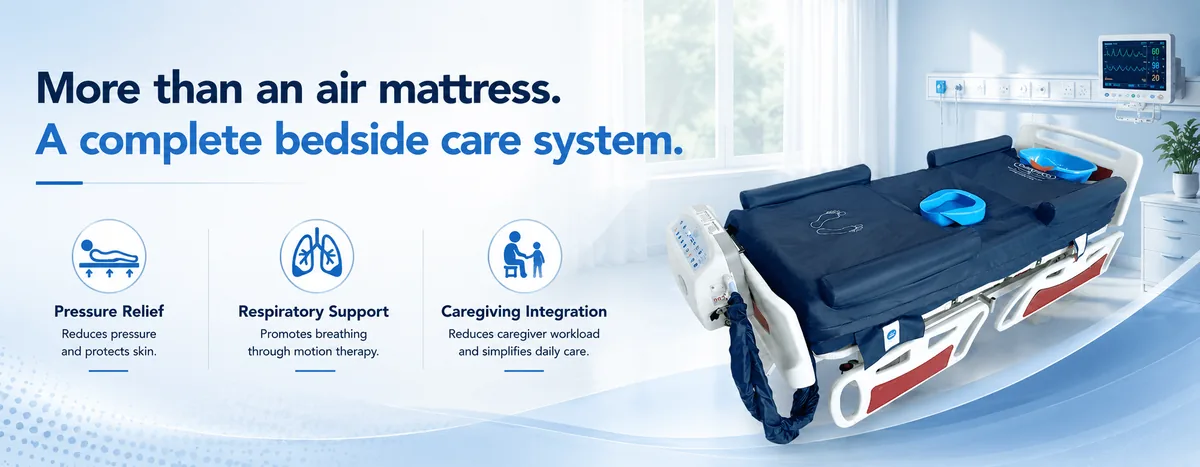
Providing long-term care for a bedridden loved one can be physically demanding and emotionally challenging. Daily tasks such as repositioning, in-bed bathing, and toileting require time, strength, and constant attention, placing significant demands on family caregivers.
ObboMed designs advanced medical air mattress systems to help make daily caregiving safer, easier, and more manageable. Our complete bedside care systems integrate patented multi-mode pressure relief with built-in fans to help maintain a cooler, drier skin environment. We also incorporate practical features like in-bed toileting and shampoo systems to support personal hygiene and inflatable guardrails to create a safer resting environment. These thoughtfully engineered functions work together to ease the physical demands placed on caregivers while supporting the comfort and dignity of patients.
Explore our selection of ObboMed alternating pressure and low air loss mattresses to find the right solution for your home.