

Blog
Pressure Ulcer Prevention & Medical Air Mattress Guide


Caring for a loved one with limited mobility can be physically and emotionally demanding. For people who spend long periods in bed, prolonged pressure on areas such as the hips, heels, shoulders, and tailbone can restrict blood flow and increase the risk of pressure ulcers, also known as bed sores or pressure sores. Heat, perspiration, and moisture from incontinence can further weaken the skin and contribute to skin breakdown.
A properly selected medical air mattress or pressure relief mattress can help redistribute body weight, reduce prolonged pressure, and manage heat and moisture around the skin. When combined with regular repositioning, skin assessment, nutrition, moisture management, and appropriate clinical care, a pressure relief mattress can be an important part of a comprehensive pressure ulcer prevention strategy.
How Does a Pressure Ulcer Mattress Work
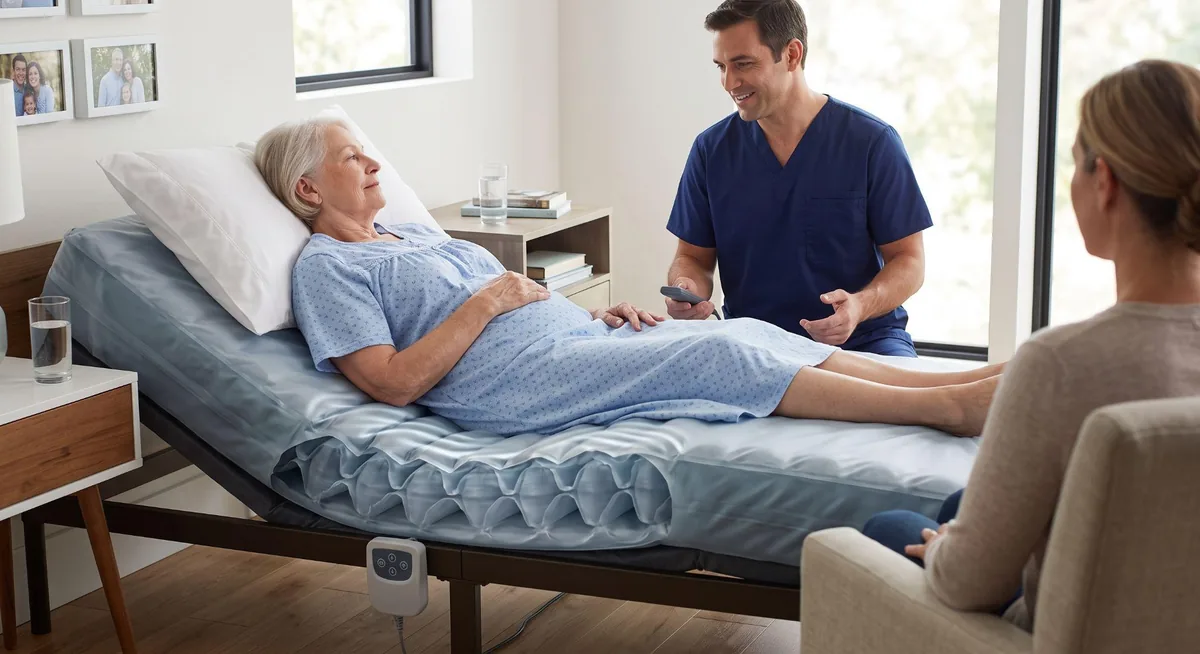
A pressure relief mattress is designed to distribute body weight over a larger surface area and reduce sustained pressure on vulnerable areas. Advanced medical air mattresses may incorporate alternating pressure, low air loss, and lateral rotation technologies to provide additional pressure management and positioning support.
- Weight Redistribution: A conventional mattress may concentrate body weight around bony prominences. An advanced support surface allows the body to gently immerse into the mattress, helping distribute pressure across a wider area.
- Support for Microcirculation: Reducing prolonged pressure on vulnerable tissues can help minimize compression of small blood vessels and support blood and oxygen circulation to the skin and underlying tissue.
- Support for Skin Recovery: By regularly changing pressure distribution and reducing prolonged loading, a pressure relief mattress can help protect skin integrity and reduce the risk of further skin breakdown. Patients with existing pressure ulcers should use a suitable support surface as part of a comprehensive care plan.
Essential Features to Look For
When choosing a medical air mattress for pressure ulcer prevention, pressure redistribution is only one factor to consider. Features such as alternating pressure, low air loss, automated repositioning, bedside care support, and integrated safety features can improve patient comfort while making daily care more manageable.
Alternating Pressure & Auto-Turning
- Dynamic Air Cycles: Air cells inflate and deflate in programmed sequences, such as a 1:1 alternating cycle. While one set of air cells remains inflated to support the body, the other set deflates to relieve pressure and promote pressure redistribution.
- Automated Repositioning: Some advanced systems provide programmable auto-turning or lateral rotation to assist with side-to-side repositioning. This can reduce the physical effort required from caregivers and support a consistent care routine. Repositioning schedules should be individualized according to the patient’s condition and clinical care plan.
Low Air Loss (LAL) & Microclimate Management
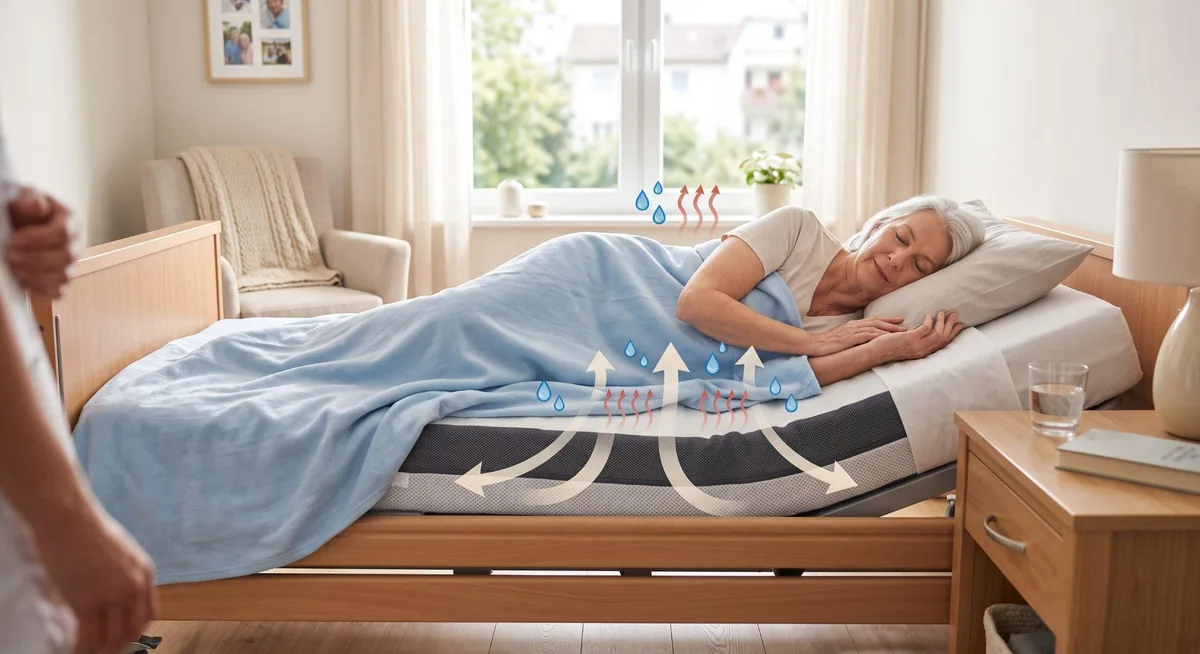
- Moisture & Heat Dissipation: Laser-drilled micro-vents release a continuous, low-volume airflow beneath the patient.
- Skin Integrity Protection: Continuous airflow helps dissipate heat and moisture around the patient’s skin, supporting a drier and more temperature-balanced microclimate and helping reduce the risk of moisture-associated skin damage.
Integrated Bedside Care & Hygiene Support
- In-Bed Care Solutions: Dedicated support cutouts and waterproof configurations can facilitate in-bed toileting, hair washing, and sponge bathing.
- Reduced Transfer Risks: Minimizing bed-to-chair transfers significantly lowers the risk of patient falls, skin injury, and caregiver back strain.
Inflatable Safety Guardrails
- Continuous Edge Support: Integrated side air bolsters remain securely inflated during tilting and turning cycles, providing consistent edge support and stability.
- Soft, Cushioned Protection: Provides a secure perimeter that eliminates roll-off risks without relying on hard metal rails that cause bruising.
- Easy Patient Ingress and Egress: Thoughtfully designed side bolsters provide stable support during entry and exit, making bed transfers easier and more comfortable for both patients and caregivers.
Medical Air Mattress Comparison
Different pressure relief mattresses offer different levels of pressure redistribution, moisture management, and caregiver support. The most appropriate mattress depends on the patient’s mobility, pressure ulcer risk, skin condition, moisture exposure, and overall care requirements.
| Mattress Type | Pressure Relief | Moisture Control | Caregiver Effort | Best Suited For |
|---|---|---|---|---|
| Standard Medical Foam | Low to Moderate | Limited | Manual repositioning | Patients with lower pressure ulcer risk and greater mobility |
| Basic Alternating Pressure | Moderate to High | Limited | Reduced manual effort | Pressure ulcer prevention and selected patients with Stage 1–2 pressure injuries |
| Low Air Loss (LAL) | Low to Moderate | High | Moderate | Patients at increased risk of skin breakdown or moisture exposure |
| Lateral Rotation / Auto-Turning | High | Low | Automated repositioning support | Patients with limited mobility or long-term bed care |
Frequently Asked Questions
Q1. What is the best mattress for preventing pressure ulcers?
There is no single mattress that is best for every patient. The most appropriate support surface should be selected according to the patient’s condition and individual care plan. For people with limited mobility or a high risk of pressure ulcers, an advanced system combining alternating pressure, low air loss (LAL), and, when appropriate, lateral rotation or automated turning may provide additional pressure management and positioning support.
Q2. How does an alternating pressure cycle work?
Internal air chambers inflate and deflate in timed cycles, such as a 1:1 alternating cycle. Deflating specific cells temporarily reduces pressure on targeted areas and redistributes support to other parts of the mattress before the cycle shifts.
Q3. Why is low air loss important for bed sore prevention?
Moisture from perspiration or incontinence can contribute to maceration and make fragile skin more vulnerable to friction and shear. Low air loss systems provide continuous airflow to help manage heat and moisture around the patient’s skin, supporting a more suitable microclimate.
Q4. Can an auto-turning mattress reduce caregiver workload?
Yes. Programmable lateral rotation can assist with scheduled side-to-side repositioning and may reduce the physical effort required from caregivers. The frequency and angle of rotation should be individualized according to the patient’s condition and care plan.
Q5. How do inflatable rails protect patients during automated turns?
A few medical air mattresses feature integrated inflatable side bolsters that provide additional edge support during repositioning and lateral rotation. Compared with conventional rigid surfaces, air-filled bolsters provide a softer perimeter and can help maintain patient positioning and facilitate easier ingress and egress. They should not be considered a substitute for appropriate fall-risk assessment or other recommended safety measures.
Make ObboMed Your Trusted Home Care Partner
Long-term care for a bedridden loved one is a demanding journey, and preventing pressure injuries is one of its important challenges. You do not have to carry the physical strain and emotional worry alone.
ObboMed specializes in advanced medical support surfaces, including alternating pressure, lateral rotation, and low air loss systems with an 820 L/min ventilation fan, designed to support patients and caregivers in both home and clinical environments.
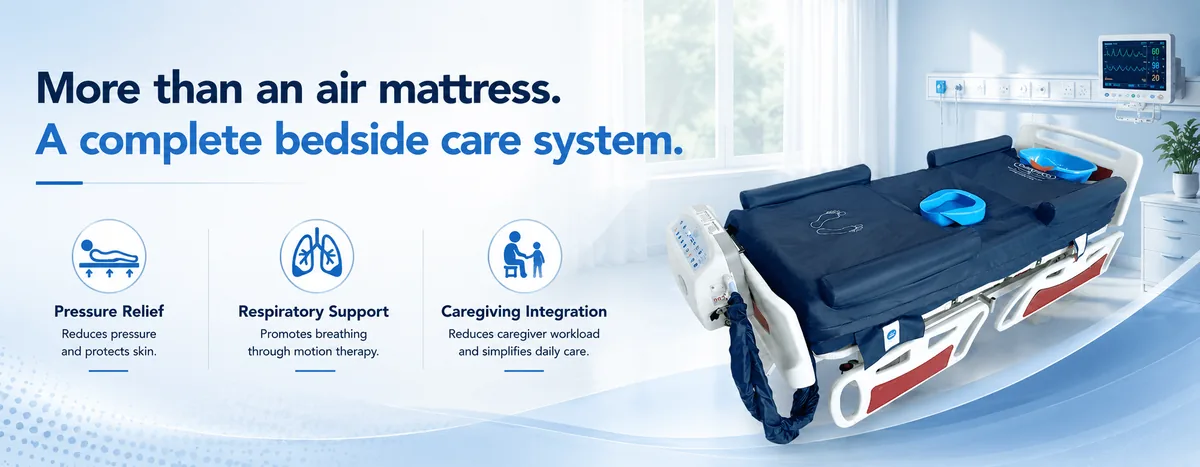
ObboMed Complete Bedside Care System is designed to provide:
- Automated Lateral Rotation: Programmable turning support can assist with repositioning and reduce the physical workload for caregivers.
- Dynamic Microclimate Control: Low air loss technology, combined with an 820 L/min ventilation fan, delivers continuous airflow to help manage heat and moisture around the patient’s skin.
- Dignified In-Bed Hygiene: Purpose-designed features can facilitate toileting, bathing, hair washing, and other routine care while reducing unnecessary transfers.
- Inflatable Safety Guardrails: Integrated air-filled side bolsters provide cushioned edge support during repositioning and turning while facilitating easier patient ingress and egress.
Whether you are caring for a loved one at home or managing patients in a clinical setting, choosing the right pressure relief mattress can help make everyday care more comfortable and manageable.